Transmitting the Dharma
- Home
- Exhibitions
- Permanent Exhibition
- Transmitting the Dharma
Transmitting the Dharma
The philosophy of Confucius (551-479 BCE) was one among many schools of thought of his time that gradually became dominant in Chinese culture and politics. However, many Confucian classics were burned during the Qin dynasty (221-206 BCE). In the following Western Han period, Emperor Wu (r. 140-87 BCE) promoted Confucianism and Han Confucian scholars set out to reproduce the destroyed classics. But copying errors, personal interpretations by scholars and influences of partisan politics all led to inaccuracies in the texts, prompting the making of the first stone-engraved Confucian texts—the Xiping Stone Classics.
During the Xiping era (172-178), the imperial court ordered scholars to standardize the classical texts, engrave them on stone tablets and place them in the Taixue (Imperial College) to provide a correct reference for the public. Subsequently, more stone classics were made. The Three Kingdom Period's Zhengshi Stone Classics (241) contains a newly verified version of the texts. Tang's Kaicheng Stone Classics (837) contains the nine core classics in the Confucian canon. In the Song dynasty (960-1279), more classics were added to make the thirteen classics of today.
Engraved in these three great stone classics is not only the profound heritage of Chinese culture, but also the Confucian spirit of "continuing the sublime teachings of the past sages, to establish a world of peace for all future generations."
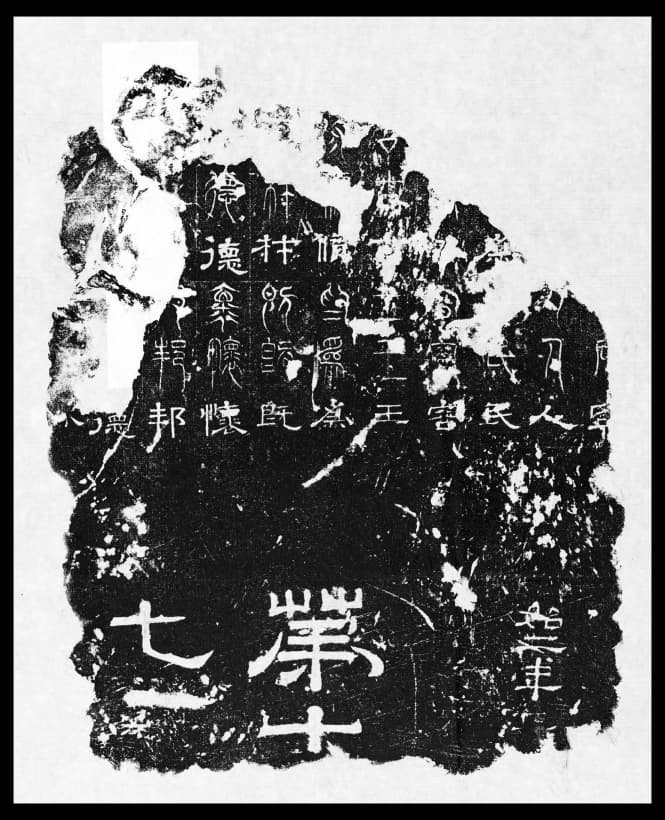
220-265 C.E.
Stone Rubbing on Paper
69 cm
202D Transmitting the Dharma: Rubbings of Chinese Classics from the Beilin Museum


.svg)