The Buddha's Intention
- Home
- Exhibitions
- Permanent Exhibition
- The Buddha's Intention
The Buddha's Intention
The Lotus Sutra says: "All buddhas appear in this world for one great cause alone."
This "one great cause" is to reveal and explain the ultimate reality realized by all buddhas, and to enable all beings to awaken to and arrive at the same realization.
And it was with this one intention that Shakyamuni Buddha traveled through India some 3,000 years ago—from Sarnath where he first turned the Dharma Wheel, to Kushinagar's twin sala trees where he entered nirvana—teaching the subtle and supreme Dharma for 49 years, guiding all beings to enlightenment, to the day when they may truly be free of suffering.
By narrating and revealing the Dharma through imagery, Buddhist art continues to promote the Buddha's one great cause. May the tangible beauty of works of art inspire us to realize the Buddha's intention and unlock the intangible prajna wisdom inherent in all beings.
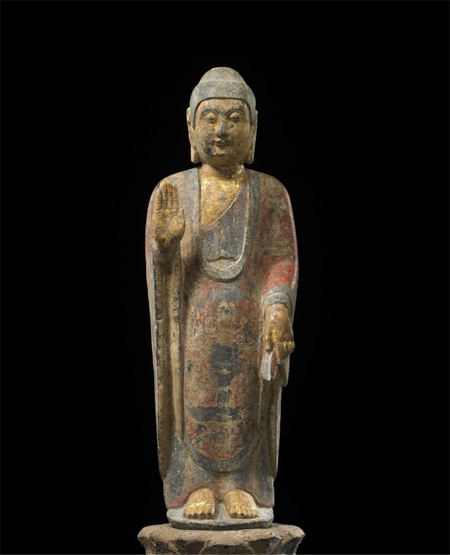
550-577 C.E.
Limestone
53 cm
101C The Buddha's Intention: Teachings and Images


.svg)