The Spirit of the Brush
- Home
- Exhibitions
- Permanent Exhibition
- The Spirit of the Brush
The Spirit of the Brush
The Chinese character is the carrier of Chinese civilization, while calligraphy is the artistic expression of the Chinese written word.
In the Shang dynasty (17th-11th century BCE), the appearance of oracle bone script and bronze inscription unveiled the dawn of Chinese civilization. These ancient scripts, which are pictorial symbols, kept evolving into more stylized forms. By the Qin period (221-206 BCE), when small seal script and clerical script came into use, Chinese characters began to look more like the form we see today, following a consistent trend of evolving from the difficult to the easy to read and write.
Moreover, how lines and strokes are put together to form a Chinese character and how that form is expressed artistically has always influenced each other in the evolution of the Chinese written language. The powerful Qin and majestic Han stone inscription, the elegant Jin, meticulous Tang, and self-expressive Song calligraphy—the cultural spirit of each age comes alive on the pages of their calligraphic works.
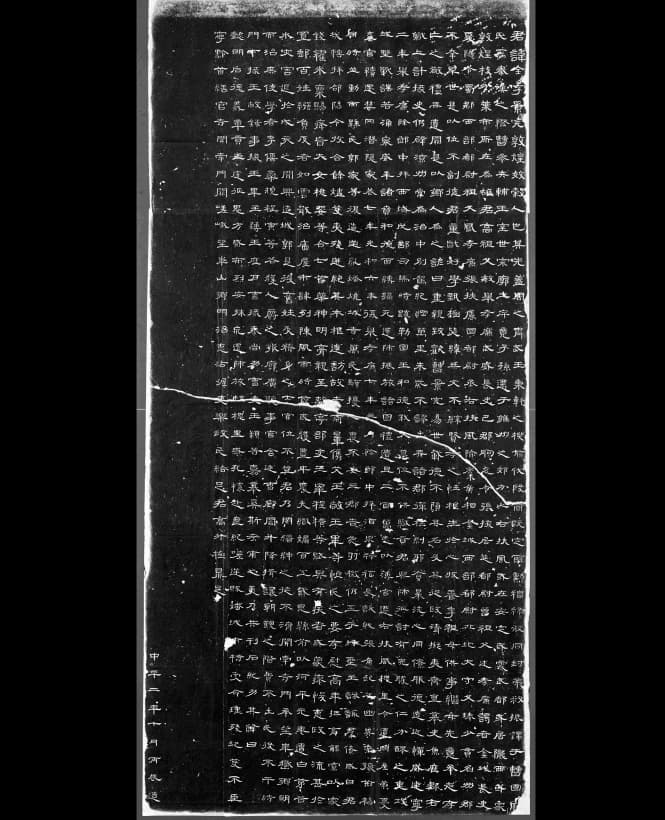
185 C.E.
Stone Rubbing on Paper
186 cm
302D The Spirit of the Brush: Calligraphy Rubbings Through the Ages
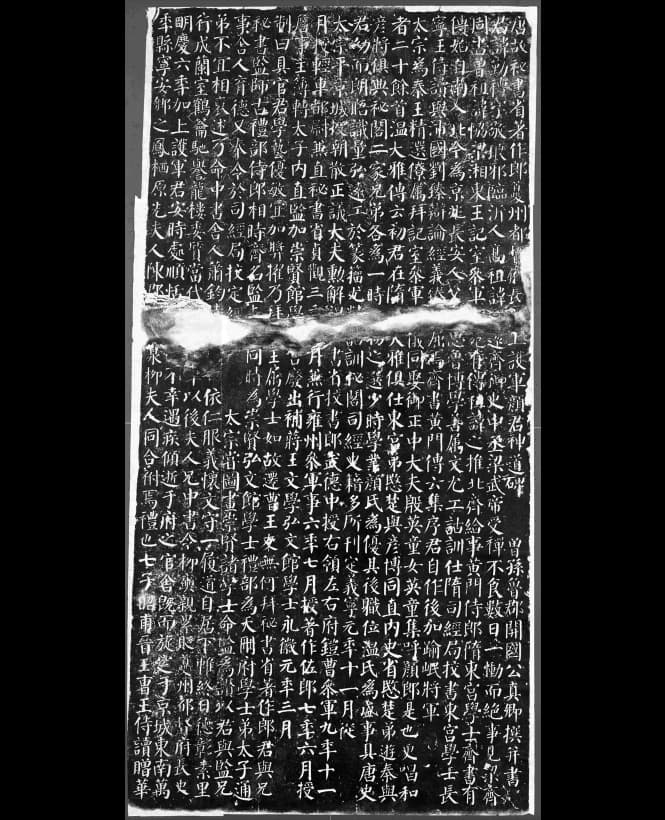
779 C.E.
Stone Rubbing on Paper
182 cm
302D The Spirit of the Brush: Calligraphy Rubbings Through the Ages


.svg)