Soaring Dragon with Auspicious Lotuses
- Home
- Exhibitions
- Permanent Exhibition
- Soaring Dragon with Auspicious Lotuses
Soaring Dragon with Auspicious Lotuses
Ancient Qingzhou was located in today’s northern Shandong, a province in the northeastern coast of China. Two major styles of Buddhist statuary came from this region: statues with mandorlas and freestanding statues. Qingzhou statues are characterized by their exquisite composition and splendid decoration, rendered with a combination of three-dimensional, relief and line-carving techniques. These distinctive regional characteristics gradually became known as the "Qingzhou style."
This gallery features Qingzhou style statues from the late Northern Wei to Northern Qi period (520-577), highlighting the development of the Qingzhou style from its beginning to the mature stage. Projecting serenity infused with vividness, the calm and dignified Qingzhou buddhas and the splendidly jeweled bodhisattvas have become classic images in Chinese sculpture.
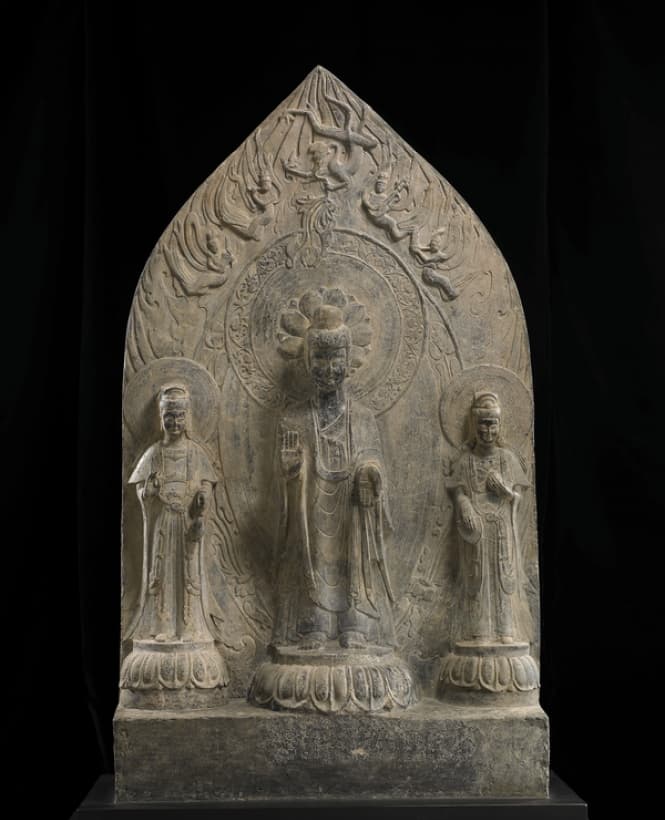
540 C.E.
Limestone
168 cm
201C Soaring Dragon with Auspicious
Lotuses: Qingzhou Style Sculpture


.svg)