Cross-Strait Museum Exchange Conference
- Home
- Learning
- Buddhist Art
- Buddhist Art Special
- Cross-Strait Museum Exchange Conference
Cross-Strait Museum Exchange Conference
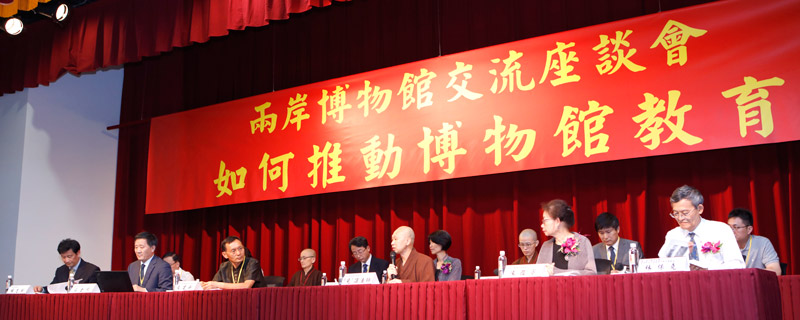
Cross-Strait Museum Exchange Conference
On the afternoon of the grand opening day of Chung Tai World Museum, a cross-strait museum exchange conference was held in the Museum Auditorium with close to 400 people attending. Specialists and scholars from both sides of the Strait held discussions on the topic "How to Promote Museum Education" with stimulating exchange of ideas and experiences.

Chung Tai Chan Monastery's abbot, Venerable Jian Deng, delivering the opening speech for the Conference
In his opening speech, Abbot Jian Deng stated that the 21th century is the century of lifelong learning, and the Museum is an important place for lifelong education and cultural exchange. Effectively training knowledgeable volunteers who can provide excellent services and bring cultural heritage to the public is crucial. The Abbot expected that through this cross-strait conference, we could broaden our horizon and learn from each other how different museums, through the educational opportunities offered, help the public become lovers of art and museums.

Chung Tai Chan Monastery's abbot, Venerable Jian Deng
Conference speakers: Director of Chung Tai World Museum, Venerable Jian Chen; deputy minister of China's State Administration of Cultural Heritage, Zhang Jianxin; director of Shanxi Museum, Shi Jinming; director of Museum of World Religions, Chen Kuo-Ning; director of Shanghai Museum, Yang Zhigang; honorary professor of Taipei National University of the Arts, Lin, Pao-Yao; director of Xi'an Beilin Museum, Pei Jianping; deputy director of Chung Tai World Museum and director of Wood Sculpture Gallery, Venerable Jian Pai; vice-director of Nanjing Museum, Ji Yalin; dean of College of Letters and Cultural Heritage, Liu Wanzhen; vice-director of Henan Museum, Liu Yuzhen; vice-director of Zhejiang Museum, Yong Taihe; deputy director of Chung Tai World Museum, Venerable Jian Xun; and vice-director of Shandong Museum, Wang Zhihou.

Conference chairperson, Venerable Jian Chen, welcomed all the museum directors, scholars and specialists from both sides of the Strait. In introducing the goals of this conference, he stressed the important meaning and functions of education to museum program and event development. Exhibition and education are important bridges between museums and the public, and the experiences provided by the different museums in this conference should provide valuable references to future museum management.
Conference chairperson, Chung Tai World Museum Director, Venerable Jian Chen
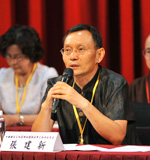
In his speech, the Deputy Minister stated that the cross-strait exchange among museums plays an important role in the specialization and service of museums, especially in promoting volunteerism and education. The gathering of all the heavyweight directors from museums on both sides of the Strait made this a joyous occasion that would certainly accelerate museum education and development.
Deputy Minister Zhang Jianxin of China's State Administration of Cultural Heritage
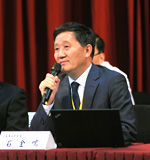
Director Shi shared stories about the history of Shanxi and its influence on Chinese culture, which are the themes behind the Exhibition, "Jin Spirit," in Shanxi Museum.
Director of Shanxi Museum, Shi Jinming
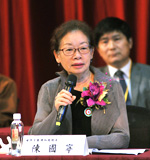
In presenting the topic, "Rethinking Museum Education," Director Chen mentioned that the development and promotion of museum education involve not just traditional education theories, but must expand to research in socio-anthropology, cultural studies, audience analysis and brand name marketing.
Director of Museum of World Religions, Chen Kuo-Ning

Using the series of activities "Ancient and Modern Artisans" held in his museum as an example, Director Yang explored the avenues of museum education, including guided tours, public lectures, winter and summer activities, teenage-specific interactive programs and so on, to elevate public aesthetics, deepen the understanding of Chinese culture, inspire cultural creativity and promote social harmony.
Director of Shanghai Museum, Yang Zhigang
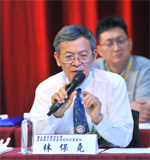
In his discussion on the topic "Explore, Exchange and Experiment," Professor Lin pointed out that Chung Tai World Museum is the first highly specialized museum in the Taiwan devoted to the themes of Buddhist art heritage and Buddhist sculptures and artifacts. With its immense exhibition space and enormous collection of Buddhist statues and objects, which are a rarity both in this country and overseas, the museum must also face extraordinary responsibility and challenge. However, through exploration and exchange to gather different ideas, and continuing experimentation, this specialized Buddhist art museum will become a most beautiful scenery in Taiwan.
Honorary professor of Taipei National University of the Arts, Lin, Pao-Yao
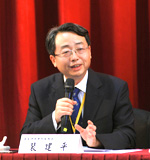
Director Pei shared examples of the special educational programs held in Xi'an Beilin Museum, such as the Beilin culture lecture hall, Chinese characters demystified, hands-on traditional culture experience, Chinese classics recitation, short historical plays performance, calligraphy summer camps, and so on. Through these unique activities, the public learns to interpret museum culture, and develop great love and enthusiasm for museums.
Director of Xi'an Beilin Museum, Pei Jianping
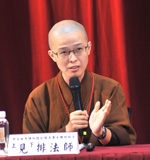
Venerable Jian Pai explored the possibility for continuous growth for the volunteers in Chung Tai World Museum, from the perspectives of participation motive, work engagement, organization commitment and the interaction among these factors. The promise of lifelong learning can motivate work engagement and strengthen commitment to organizational value, leading to a positive feedback cycle for growth.
Deputy director of Chung Tai World Museum and director of Wood Sculpture Gallery, Venerable Jian Pai
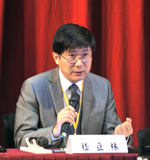
Vice-Director Ji mentioned that Nanjing Museum, in its emphasis on viewer participation and experience, organically integrates professionalism, knowledge, interest and enjoyment in its planning of audience-specific educational activities, in order to establish a close connection between viewers and museums.
Vice-director of Nanjing Museum, Ji Yalin
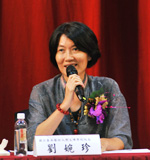
Dean Liu stressed that from an elitist academic hall to a friendly place where the public can roam freely, museums must use life education as the core value in volunteer development and education, shifting focus from the concept of "lecturing to the viewers" to the approach of "interactive dialogues," and clearly recognizing that providing services to society and people as the foundation are the key values of museums.
Dean of College of Letters and Cultural Heritage, Liu Wanzhen
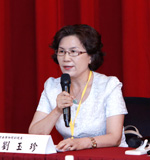
Vice-director Liu mentioned that in recent years, museum education has begun to shift focus from teaching to learning, from imparting knowledge to a multi-level and multi-variety approach: providing learning resources to the public, actively bringing museum services to school and society in order to connect with a wider audience. Moreover, museums should make good use of volunteers and the social resources they create to advance the power of museum education.
Vice-director of Henan Museum, Liu Yuzhen

Vice-director Yong spoke about the concept of developing education based on people and shared the on-going innovation of education models in his museum. Through using traditional culture as the themes, targeting different audience groups, designing series of activity, trade-marking, satisfying the needs of different age groups, interactive activities in collaboration with exhibitions, and so on, the museum improves the quality of service, expands communication channels, inviting more people to visit the museum.
Vice-director of Zhejiang Museum, Yong Taihe
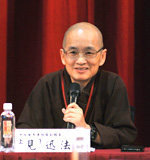
Drawing on her experience as director of the former Chung Tai Museum, Venerable Jian Xun discussed promoting education activities using the cases of special exhibitions, Chinese New Year activity series, and collaboration with school. Museum exhibitions are expedients that bring Buddhist and Chinese culture to the public, and the art works in the Museum's collection are enlightening treasures that purify and soothe minds.
Deputy director of Chung Tai World Museum, Venerable Jian Xun

Vice-director Wang discussed museum education by introducing the works in Shandong Museum, which reflect the people, history, and natural environment of Shandong. Exhibitions specific to different levels and needs of audience are held, developing the three education brand names: Confucian lecture hall, history classroom, and nature classroom.
Vice-director of Shandong Museum, Wang Zhihou
In his concluding speech, Conference Chairperson the Venerable Jian Chen affirmed that exchange and mutual visits are important means in promoting museum education. The many case studies, examples and concepts, such as "people as the foundation," shared during the conference could be learning models and references for future museum education development. This sharing and exchange among museum directors and scholars from both sides of the Strait should inspire growth in the frequency, richness and variety in future exchanges between museums and museums, museums and the academia, and museums and schools. Chung Tai World Museum will continue to expand, aiming to become a platform for the exchange of religion, culture, history and knowledge. He expressed his heartfelt gratitude and appreciation for all the honorable guests who traveled long distance to attend the conference, and looked forwards to the continuation of cross-strait museum dialogue with its inspiring influence in creating harmony in the world.


.svg)