The Study of the Development of Chinese Characters Through Writing Devices and Mediums -- Lecture Review.
- Home
- Learning
- Promotional Activities
- Educational Activities
- The Study of the Development of Chinese Characters Through Writing Devices and Mediums -- Lecture Review.
The Study of the Development of Chinese Characters Through Writing Devices and Mediums -- Lecture Review.
For the fourth lecture on "The Culture of Calligraphy and Stone Rubbings" organized annually at the museum, we invited Professor Tao Yu-Pu from the Department of Chinese Language and Literature at the National Chi Nan University as our keynote speaker. Professor Tao specializes in Six Dynasties Literatre, Buddhist Philosophy and Aesthetics. His lecture, entitled "The Study of the Development of Chinese Characters Through Writing Devices and Mediums," provided multifaceted view of the topic and was very inspiring.
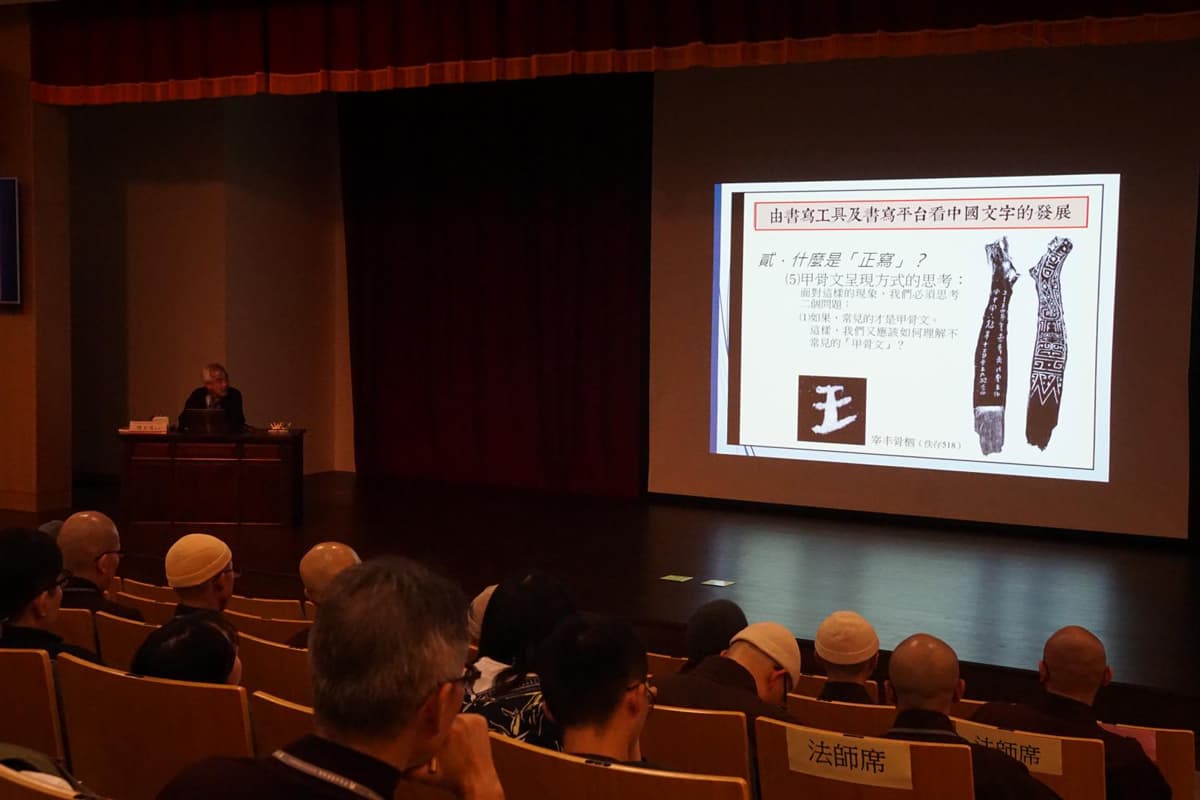
From between the mid-19th and mid-20th century, with the publication of several archaeological reports, many scholars have written articles and books on the development of Chinese Language and its characters. In 1926, a scholar named Li Jin-Xi (1890-1978) published a diagram, Diagram Showing the Evolution of Chinese for the Last Four Millenniums to introduce Chinese Language at the World Fair in Philadelphia. Professor Tao citied Li's article as an anecdote at the beginning of his lecture to explain the differences between the formal and informal Chinese calligraphic scripts stemmed from the varying writing materials that were used throughout the decades. The diversity of such writing materials ranged from animal shells and bones to bronze, stones, bamboo, silk, and even paper. Due to the assortments of writing materials, differences can also be found between the formal and informal Chinese calligraphic scripts from the same period. An example of this phenomenon can be seen from the differences between the Jin styled calligraphic forms and the scripts on oracle bones from the Shang dynasty.
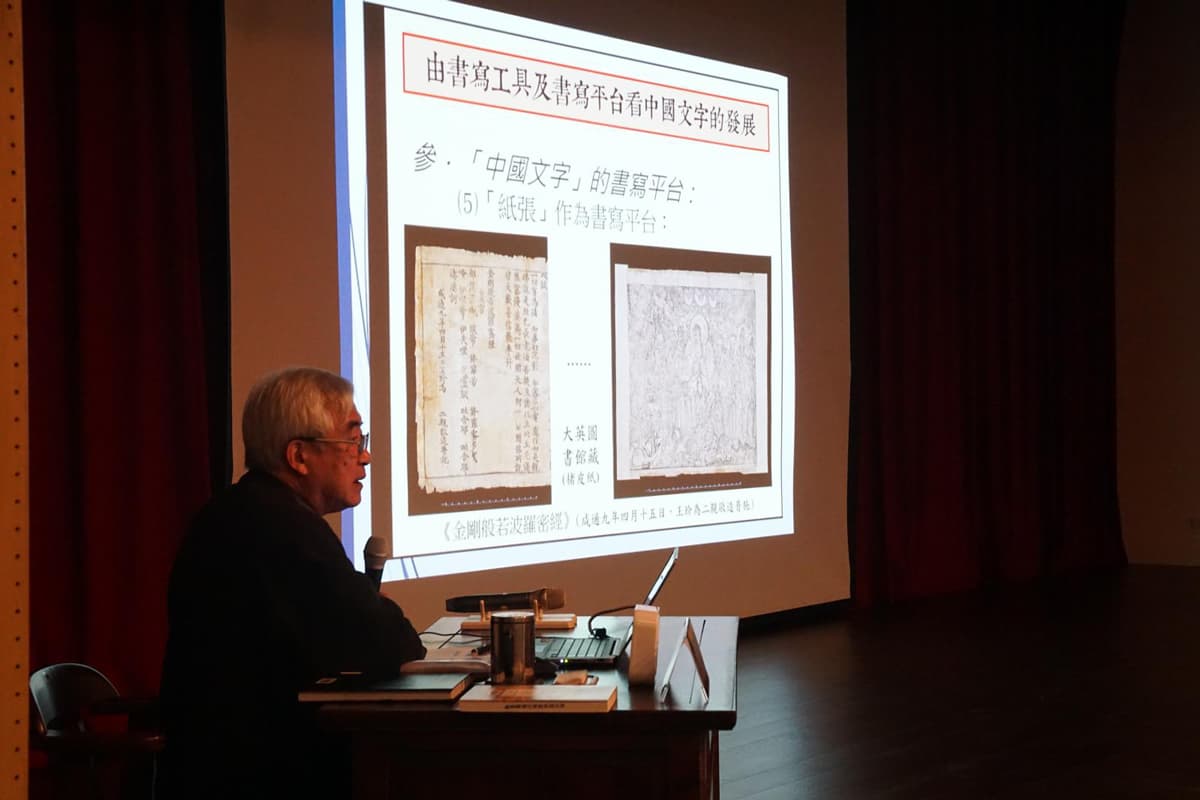
The materials of Chinese calligraphy and writing are also imbued with an element of pragmatism. Paper superseded bamboo strips to become the most popular medium for writing because it was easier to store, provided more space for writing and it was also a non-editable material that could prevent forgeries. Furthermore, Professor Tao also spoke about the origins of paper and its usage in other countries. An example that he mentioned was the papyrus paper which originated from Egypt. Professor Tao also included many pictures of plants from National Chi Nan University to enhance our understanding of what the ingredients for making paper looked like before the process of manufacturing.
At the end of the lecture, Professor Tao also spoke about the writing techniques that were popular during the time. Drawing upon classical examples Preface of Lanting (蘭亭序) by Wang Xizhi in the Eastern Jin dynasty, Professor Tao concluded that these techniques were emblematic of human innovation. Thus, the practice of calligraphy and writing is conductive for one's spiritual wellbeing.


.svg)